Handbook
Professional Stage construction design and build services
A professional event stage is more than a performance area; it is the visual center of the program, the place where key messages, brand identity, speakers, performances, and emotional moments come together.
This guide introduces the key elements of stage construction, from design and structure to lighting, audiovisual equipment, production, installation, and project coordination for different types of events.
Our stage construction services
The HoaBinh Group (The HBG) provides stage construction services for conferences, opening ceremonies, gala dinners, exhibitions, product launches, anniversaries, corporate events, festivals, and large-scale public programs. Each stage is designed and built based on the event objective, venue conditions, audience size, technical requirements, brand identity, and safety standards.
A complete stage construction service may include stage concept design, 3D visualization, structure planning, backdrop construction, LED screen setup, lighting, sound, rigging, flooring, decoration, branding, transportation, on-site installation, operation support, dismantling, and site restoration. By managing these elements together, the event stage can remain consistent in both visual quality and practical performance.
For businesses and organizations, working with an experienced event production team helps reduce coordination pressure. The HBG can support clients from the first brief to the final handover, ensuring that the stage is not only impressive but also practical, stable, and aligned with the overall event experience.
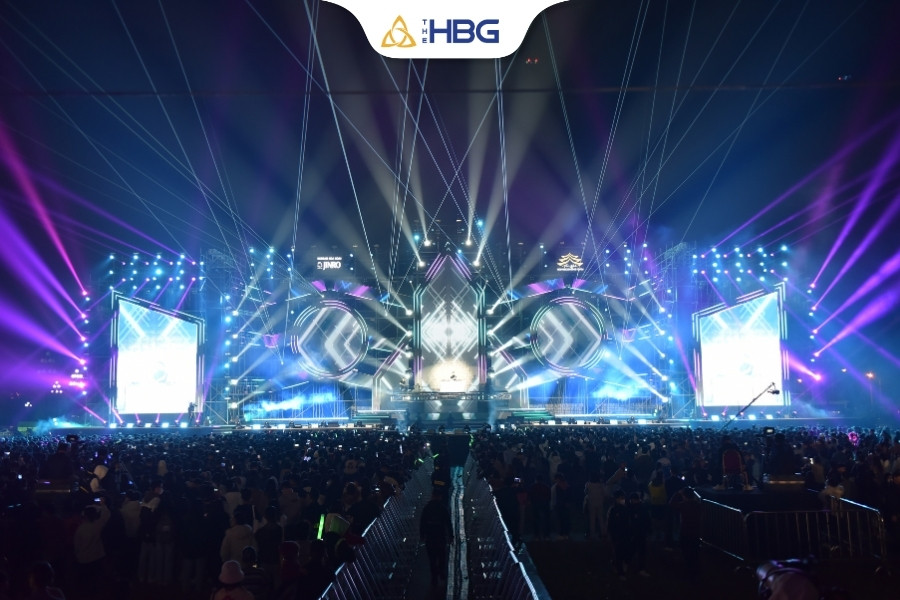
The HBG’s stage construction services cover design, structure, technical setup, installation, and on-site support for professional events.
Stage design and 3D visualization
Stage design is the first step in creating an effective event space. A good design should reflect the event theme, brand identity, communication message, audience viewing angle, venue layout, and technical needs. It should also consider how speakers, performers, MCs, VIP guests, and technical teams will move during the program.
3D visualization allows clients to preview the stage before production begins. Through 3D renderings, the organizing team can review the backdrop, LED screen position, lighting direction, stage height, stairs, branding area, floral decoration, podium placement, seating arrangement, and overall visual composition.
This step is especially important for events that require a strong visual impression, such as product launches, award ceremonies, corporate anniversaries, investor events, and international conferences. A clear 3D design helps reduce misunderstandings, support faster approval, and ensure that all production teams follow the same direction.
The HBG can develop stage concepts that balance creativity and feasibility, helping clients create a stage that looks impressive while remaining suitable for the venue, timeline, and budget.
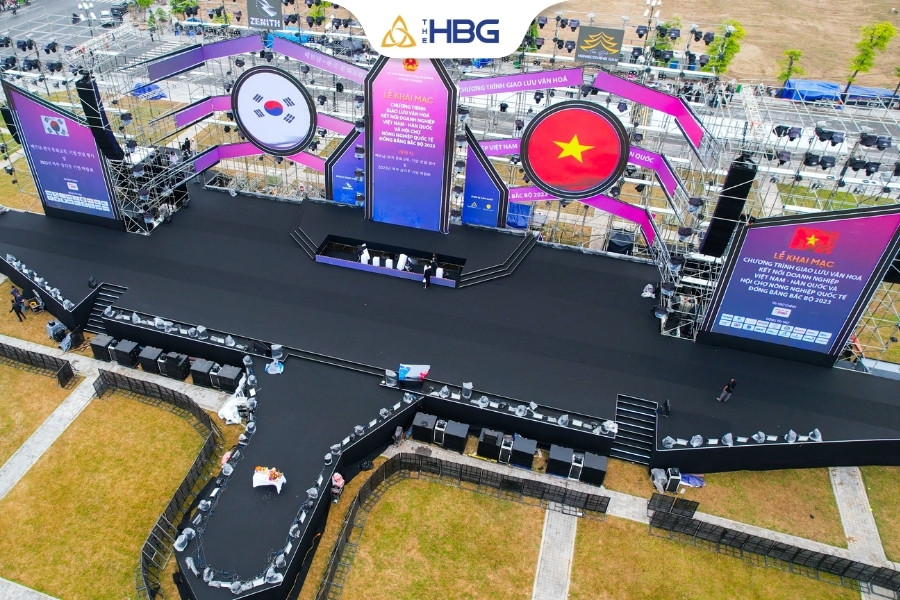
Stage design and 3D visualization help clients preview the event stage clearly before production and installation begin.
Stage structure and backdrop construction
Stage structure and backdrop construction are core parts of stage construction. The structure must be stable, safe, and suitable for the event scale, while the backdrop should communicate the event theme and brand message clearly.
Depending on the venue and event format, the stage may include wooden platforms, steel frames, truss systems, modular structures, LED frames, printed backdrops, fabric panels, decorative panels, stairs, ramps, podium areas, photo zones, and side wings. Each element must be measured accurately and produced according to the approved design.
Backdrop construction also plays a major role in the event’s visual identity. A well-built backdrop can enhance photos, livestream frames, speaker appearances, award moments, and brand exposure. It should be clean, balanced, and easy to read from different viewing distances.
For indoor events, the structure should fit the ceiling height, venue access, and technical layout. For outdoor events, it must also consider wind, weather, ground conditions, and additional stability requirements. Careful planning helps ensure that the stage remains secure and professional throughout the program.
Stage lighting and audiovisual equipment
Lighting and audiovisual equipment help bring the stage to life. Even a well-designed stage may not create the expected impact without suitable lighting, sound, LED screens, projection, microphones, and technical operation.
Stage lighting can highlight speakers, enhance performances, create atmosphere, and guide audience attention. Depending on the event type, lighting may include front lights, moving heads, wash lights, spotlights, decorative lighting, LED effects, or programmed lighting scenes for different program segments.
Audiovisual equipment is equally important. Sound systems, microphones, LED screens, video playback, presentation systems, livestream equipment, camera setup, interpretation systems, and stage monitors must be planned according to the venue size and program requirements. For conferences and formal ceremonies, clarity and stability are essential. For gala dinners and entertainment events, atmosphere and transitions may be more important.
The HBG can coordinate stage construction with AV planning to ensure that visual design, technical equipment, and program operation work smoothly together.
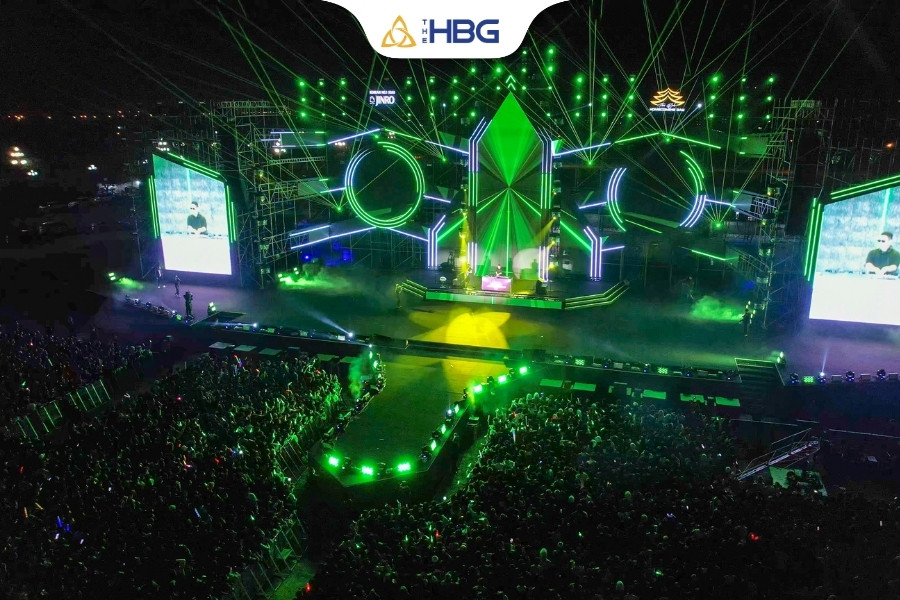
Stage lighting and audiovisual equipment enhance visibility, atmosphere, communication, and the overall audience experience.
Custom stage construction for different event types
Every event has different objectives, so stage construction should not follow one fixed format. A conference stage needs to look professional and support presentations. A gala dinner stage should feel elegant and engaging. A product launch stage must highlight the product and create a memorable reveal moment. An opening ceremony may require formal protocol, ribbon-cutting, LED content, and VIP movement.
Custom stage construction allows the stage to be designed around the event’s real needs. This may include different stage heights, backdrop styles, LED screen sizes, catwalks, performance areas, product display zones, VIP seating connections, photo moments, or interactive elements.
For corporate events, the stage should reflect brand identity clearly. For public events, it may need stronger scale, visibility, lighting impact, and safety planning. For hybrid or livestreamed events, the stage must also be camera-friendly, with suitable lighting, background depth, and screen placement.
By customizing each stage, The HBG helps clients create event spaces that are both functional and memorable.
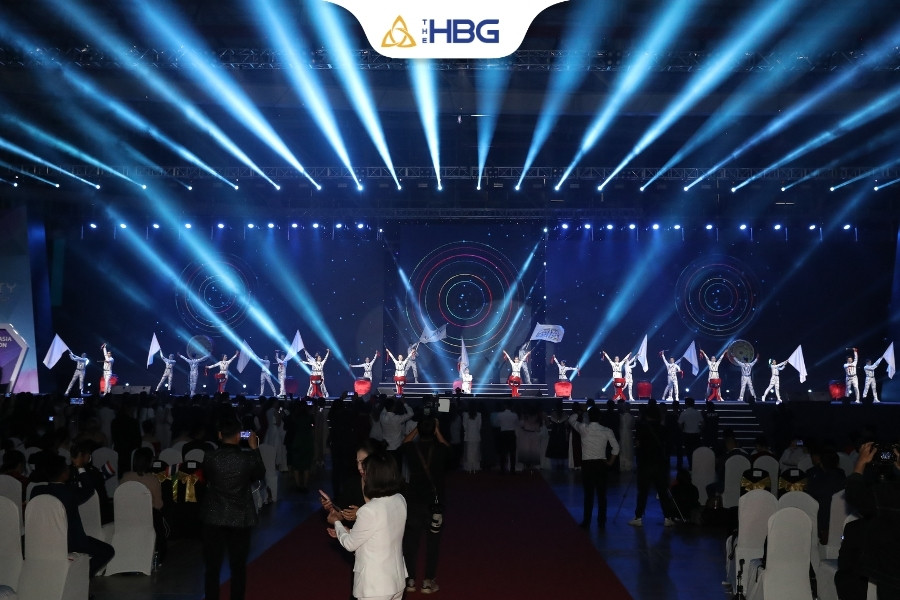
Custom stage construction ensures that each event stage matches the program format, brand message, audience experience, and technical requirements.
Stage construction for different types of events
Stage construction can be adapted for many event formats, each with its own requirements for design, structure, lighting, sound, branding, and audience engagement. The right stage should support the purpose of the event while creating a strong visual center for the entire program.
For conferences and seminars, the stage usually needs a clean layout, clear backdrop, LED screen, podium, speaker seating, proper lighting, and strong sound quality. The focus is on professionalism, visibility, and smooth content delivery.
For opening ceremonies, inaugurations, groundbreakings, and ribbon-cutting events, the stage should support formal protocol, VIP movement, ceremonial props, media coverage, and branded photo moments. Safety, timing, and visual clarity are especially important.
For gala dinners, year-end parties, award ceremonies, and corporate anniversaries, the stage often needs stronger decorative impact. Lighting effects, LED content, performance space, award areas, and emotional storytelling moments should be considered carefully.
For exhibitions and product launches, the stage may be used for product presentations, live demonstrations, brand storytelling, press moments, and customer engagement. The design should highlight the product and help visitors understand the key message quickly.
For outdoor festivals, community events, and public programs, the stage must be built with stronger attention to scale, weather conditions, technical safety, crowd visibility, and operational stability.
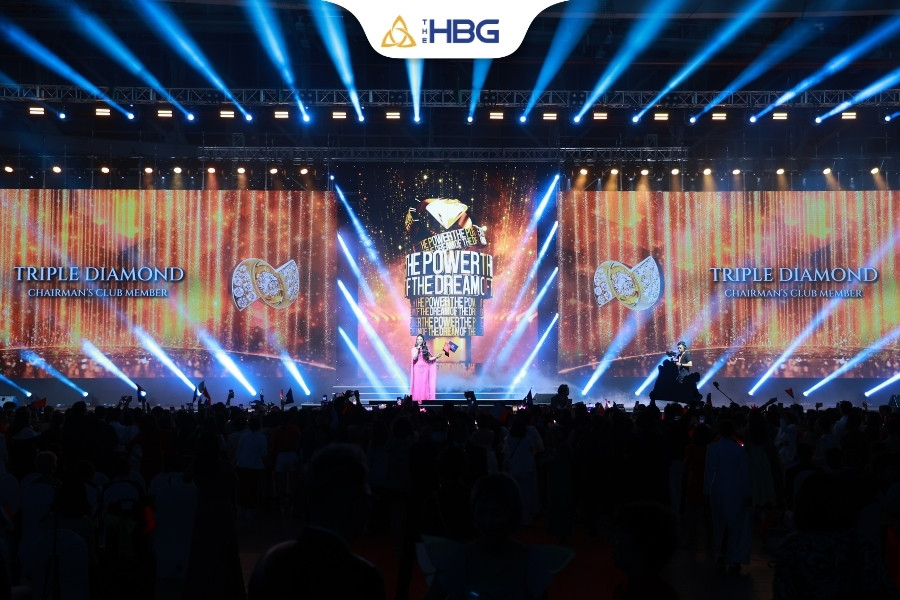
Different event types require different stage layouts, structures, and technical solutions to support the program effectively.
The HBG’s stage construction process
A professional process also reduces risks during installation. By checking requirements early, preparing materials properly, and coordinating with other event teams, the stage can be completed on schedule and operated more smoothly during the program.
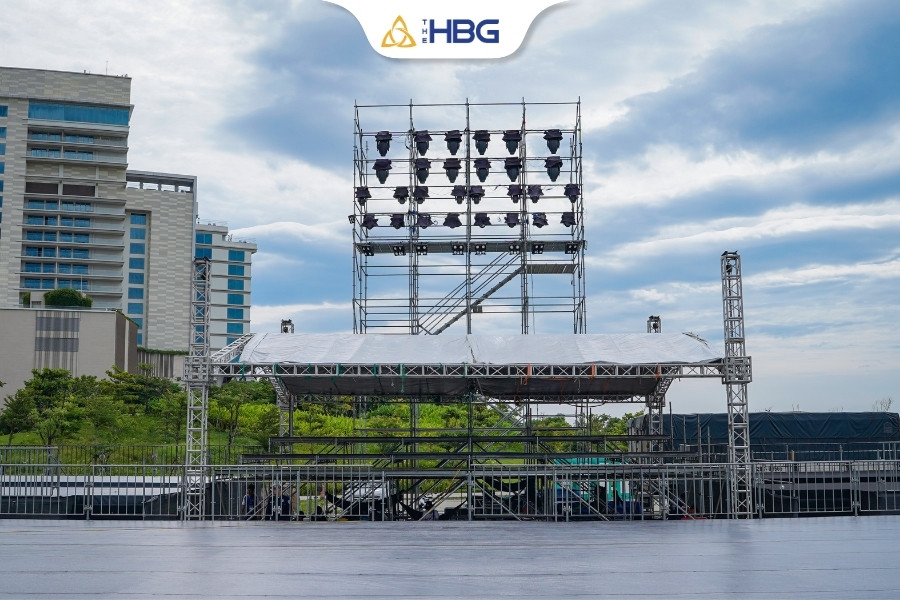
The HBG’s stage construction process helps keep each project organized, practical, and aligned with the event’s goals.
Event requirements and site survey
The process begins with understanding the event requirements. This includes the event type, number of guests, venue location, indoor or outdoor setup, stage purpose, program flow, branding needs, technical requirements, VIP protocol, and budget direction.
A site survey is also important because every venue has different conditions. The team needs to check available space, ceiling height, floor condition, loading access, electrical points, safety rules, audience sightlines, backstage areas, and installation time. For outdoor events, ground level, weather exposure, wind direction, drainage, and structural stability must also be reviewed.
This step helps the project team identify what is possible, what needs adjustment, and what must be prepared in advance. It also helps prevent design ideas that look good on paper but are difficult or unsafe to build at the actual venue.
Stage concept and design
After gathering the requirements, the team develops the stage concept and design direction. This stage includes deciding the visual style, layout, backdrop structure, LED screen position, stage height, stairs, technical zones, branding placement, lighting direction, and decorative elements.
The design should reflect the event message while remaining practical for construction. For example, a medical conference may require a clean and formal stage, while a gala dinner may need a more elegant and emotional atmosphere. A product launch may need a dramatic reveal area, while an inauguration may need space for ceremony props and VIP guests.
3D visualization can be used to present the stage clearly to the client. This helps the organizing team review proportions, colors, materials, and viewing angles before approving production.
Production and preparation
Once the design is approved, the production and preparation stage begins. This includes preparing stage platforms, frames, backdrop panels, printed graphics, LED structures, flooring, decorative items, signage, lighting equipment, AV systems, furniture, and supporting materials.
Production must follow the approved measurements and design specifications. Branding colors, logo placement, panel finishing, material quality, and structural details should be checked carefully to ensure the final stage looks professional.
Preparation also includes logistics planning. The team needs to schedule transportation, loading time, manpower, tools, installation order, technical testing, and coordination with the venue or event organizer. For large-scale events, pre-assembly or partial testing may be needed to reduce risks during on-site setup.
On-site stage construction and installation
On-site stage construction and installation bring the approved design into the actual event space. The team assembles the stage structure, installs the backdrop, sets up LED screens, lighting, sound, flooring, stairs, decorative elements, and branding materials according to the agreed layout.
During installation, safety and accuracy must be controlled carefully. Stage platforms should be stable, structures must be secured, electrical systems should be checked, and all visual elements need to match the approved design. The technical team should also test microphones, LED content, lighting scenes, presentation files, video playback, and other systems before rehearsal.
On-site coordination is essential because stage construction often happens together with seating setup, registration, exhibition booths, decoration, catering, livestream, and other event elements. A professional supervisor helps manage timing, solve issues quickly, and ensure that the stage is ready before the program begins.
How much does stage construction cost?
The cost of stage construction depends on the event scale, venue conditions, stage size, design complexity, materials, technical equipment, production timeline, and installation requirements. A simple indoor stage with a printed backdrop will have a different budget from a large custom-built stage with LED screens, lighting systems, truss structures, decorative panels, and performance areas.
Key cost factors may include stage platform size, backdrop material, LED screen rental, lighting design, sound system, furniture, floral decoration, branding elements, transportation, labor, installation time, and dismantling. Outdoor stages may require additional budget for roofing, weather protection, reinforced structures, safety barriers, and technical backup.
To optimize the budget, businesses should define the event objective clearly from the beginning. A professional event partner can recommend suitable stage solutions based on the venue, audience size, visual expectations, and available budget. Instead of choosing the biggest or most expensive option, the goal should be to create a stage that is safe, attractive, practical, and aligned with the event message.
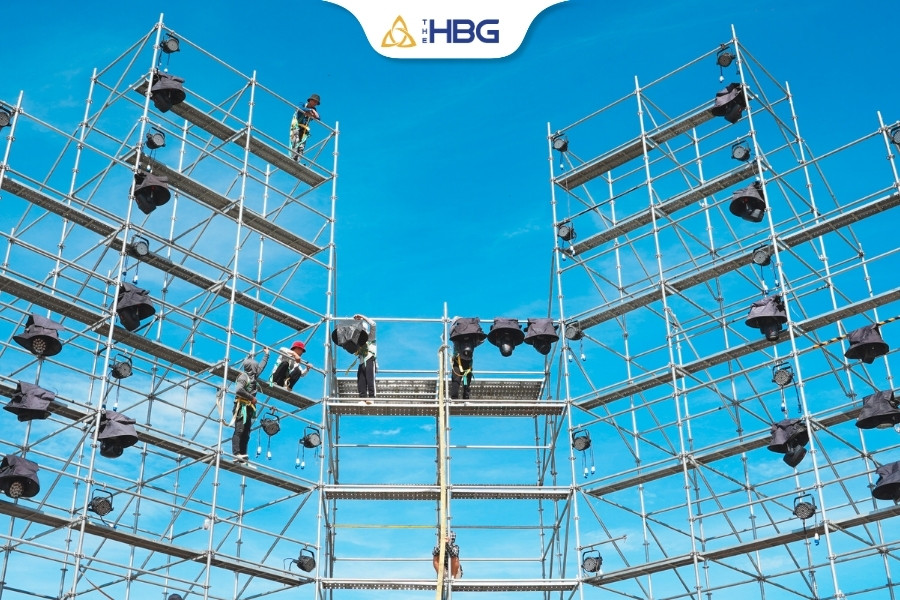
Stage construction costs depend on stage size, design complexity, materials, technical systems, venue conditions, and installation requirements.
What to consider when planning stage construction?
A well-planned stage helps the program run smoothly and creates a better experience for guests, speakers, performers, VIPs, media teams, and technical operators. It also helps reduce last-minute changes, safety risks, unexpected costs, and production delays.
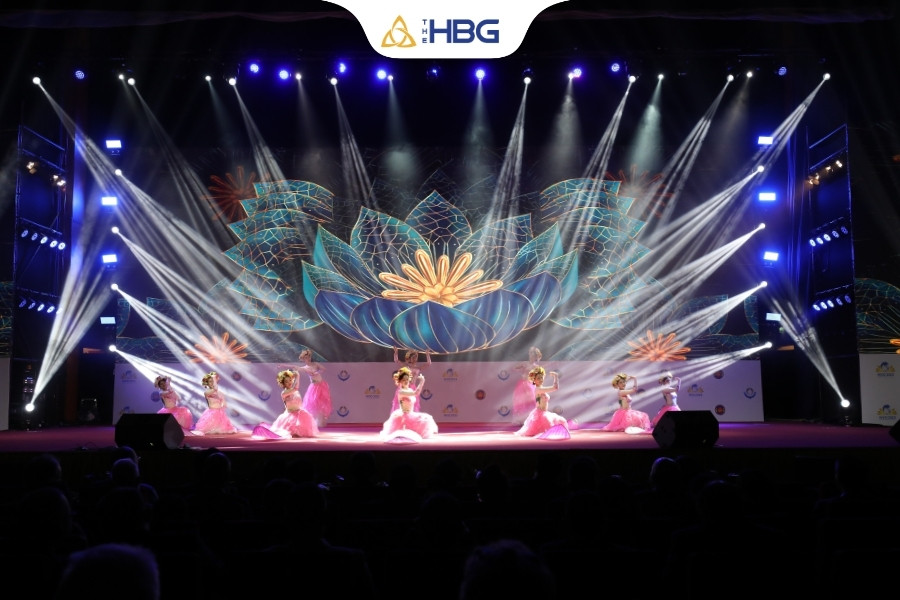
Effective stage planning balances design, safety, functionality, audience experience, and smooth event coordination.
Choosing the right stage size and layout
The stage size should be based on the event format, venue area, number of guests, program activities, and technical requirements. A conference may need a clean stage with a podium, panel seating, and LED screen, while a gala dinner may require more space for performances, award presentations, and entertainment segments.
Audience visibility is one of the most important factors when choosing the stage layout. The stage should be high enough for guests to see clearly but not so large that it overwhelms the room. For wide venues, LED screens or side screens may be needed to support visibility. For smaller venues, a compact stage with a strong backdrop can be more effective.
The layout should also support movement. Speakers, MCs, performers, VIP guests, and technical teams need clear paths to enter, exit, and move safely during the program. Stairs, ramps, backstage access, and ceremonial areas should be included when necessary.
Selecting materials and structural solutions
Material selection affects the appearance, safety, durability, and cost of stage construction. Common materials may include wood platforms, steel frames, aluminum truss, fabric panels, printed boards, acrylic, LED structures, carpet, vinyl flooring, decorative panels, and modular systems.
For formal events, clean finishing and premium-looking surfaces are important. For outdoor events, materials must be stronger and more resistant to weather conditions. For events with performances or heavy equipment, the stage structure must be designed to support movement, load, and technical systems safely.
Structural solutions should also match the venue conditions. Indoor ballrooms, convention centers, outdoor squares, hotel gardens, factories, and exhibition halls all require different construction approaches. Choosing the right materials and structure from the beginning helps keep the stage stable, attractive, and practical throughout the event.
Ensuring stage safety and stability
Safety is a critical requirement in every stage construction project. The stage must be stable, level, properly assembled, and able to support people, equipment, decoration, LED screens, lighting systems, and other technical elements.
The construction team should check load capacity, platform stability, stair safety, cable management, electrical systems, truss connections, screen support, and emergency access. For outdoor stages, additional attention should be given to wind, rain, ground conditions, roofing systems, and anchoring solutions.
Safety planning should happen before installation, not only during setup. A professional team will review drawings, venue rules, technical requirements, and installation methods in advance to reduce risks. During the event, the stage should also be checked before key moments such as performances, ceremonies, product reveals, or VIP appearances.
Coordinating stage construction with other event elements
Stage construction must be coordinated with lighting, sound, LED content, seating layout, registration, decoration, livestream, photography, catering, exhibition booths, and event operations. If these elements are planned separately, the event may face problems such as blocked views, poor lighting, cable clutter, delayed setup, or inconsistent branding.
For example, the LED screen size should match the content format. Lighting positions should support both live viewing and camera recording. The stage backdrop should work well with the seating arrangement and livestream frame. The installation schedule should also align with venue access, rehearsal time, and other setup tasks.
The HBG can coordinate stage construction as part of a complete event production process. This helps ensure that the stage works smoothly with the whole program, not as a separate technical item.
Our stage construction projects
The HBG has supported many corporate events, conferences, ceremonies, gala dinners, product launches, and MICE programs where the stage played a central role in brand communication and audience engagement. Each project required different design directions, construction solutions, technical setups, and on-site coordination.
Below are suggested portfolio image placements that can be used to showcase stage construction quality, event scale, and visual diversity across different event formats.
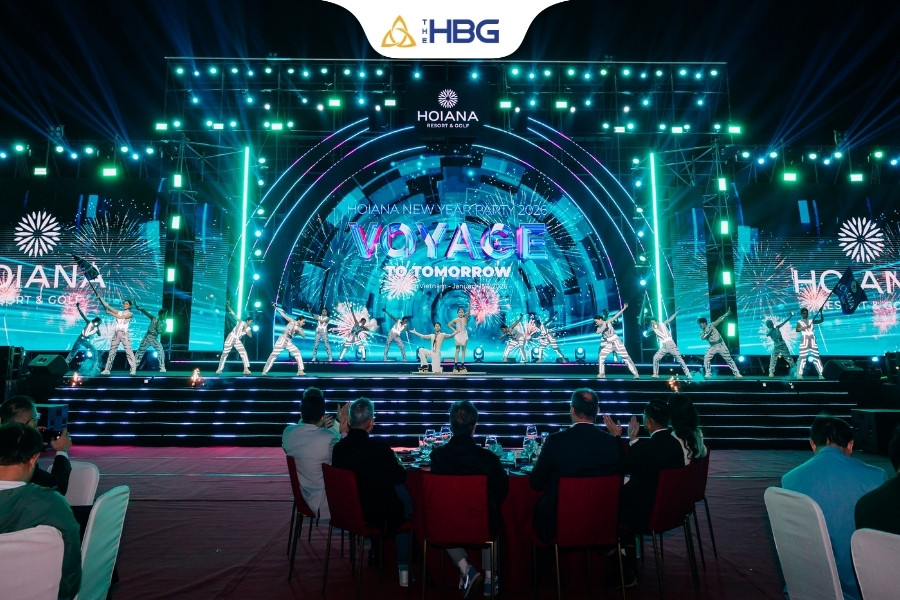
Hoiana New Year Party
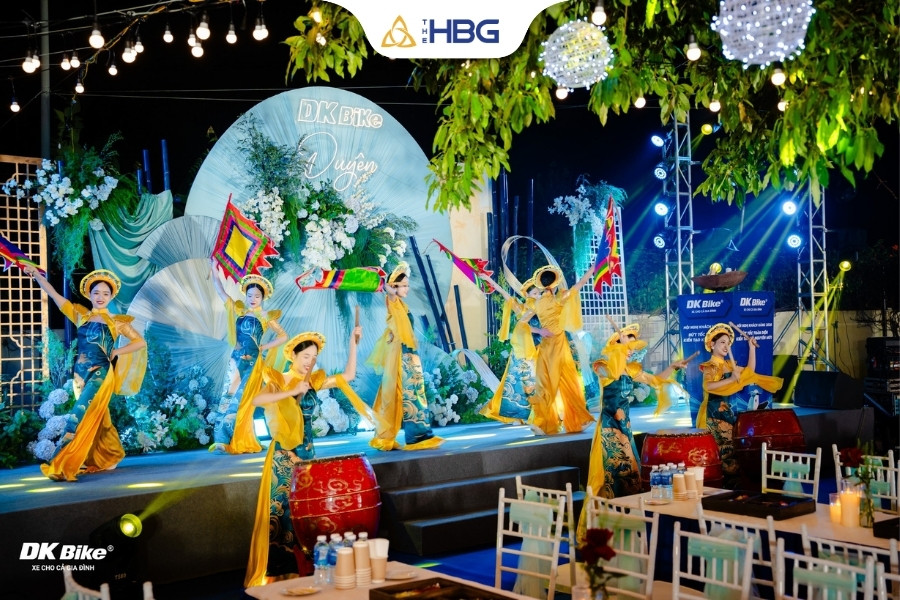
DK Bike Customer Conference
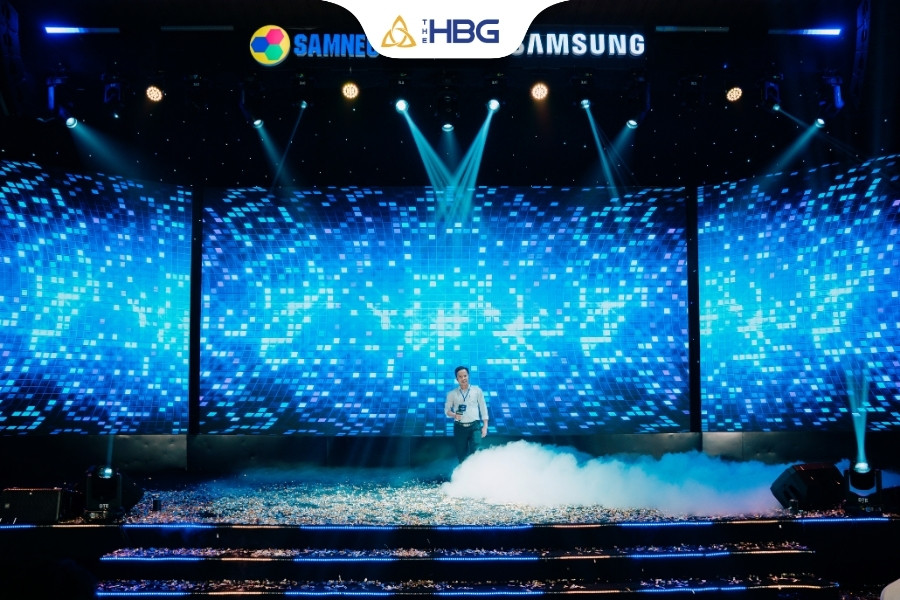
Samnec – Samsung Customer Conference
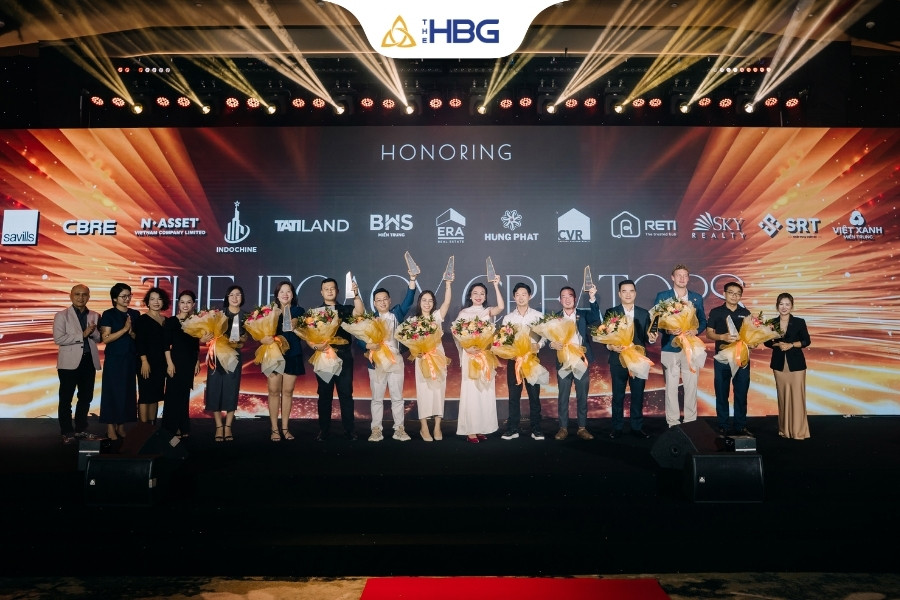
Filmore Honors Gala
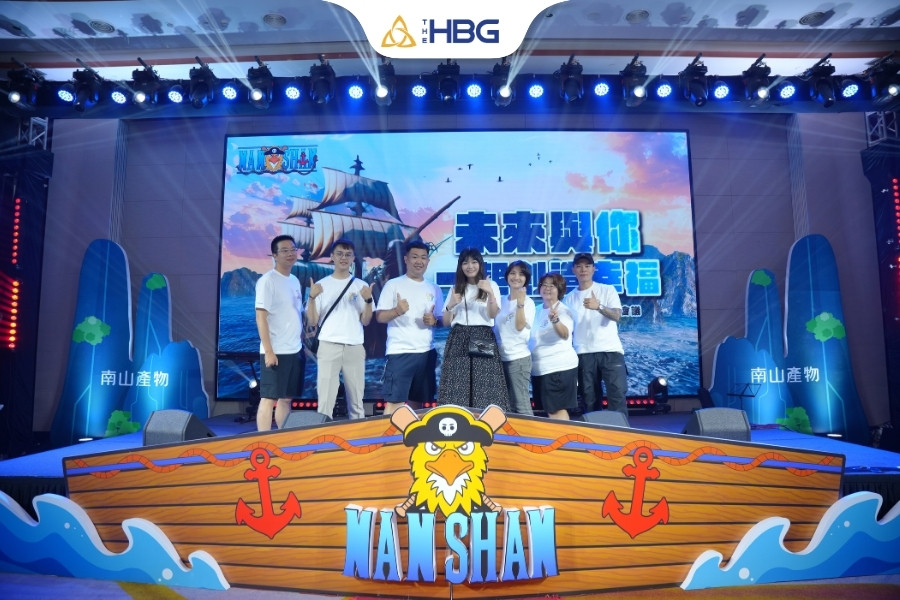
Namshan Honors Gala
Why choose The HBG for stage construction?
The HBG is a reliable partner for businesses and organizations that need professional stage construction for conferences, ceremonies, exhibitions, gala dinners, product launches, and large-scale corporate events. With experience in event production, MICE services, technical coordination, and on-site operation, HBG can support clients from concept development to final execution.
One of the key advantages of working with The HBG is the integrated approach. Instead of managing separate suppliers for stage design, construction, lighting, sound, LED screens, decoration, logistics, and on-site operation, clients can work with one coordinated team. This helps reduce communication gaps, save time, and improve quality control.
The HBG also understands that every event has different goals. A government conference requires formality and precision. A corporate gala needs emotion and visual impact. A product launch needs creativity and attention. An outdoor ceremony needs strong safety planning. By adapting the stage solution to each event, HBG helps clients create a stage that supports both brand image and program performance.
From stage design and 3D visualization to structure production, technical setup, installation, operation support, dismantling, and site restoration, The HBG provides comprehensive services to make each event stage professional, stable, and visually effective.
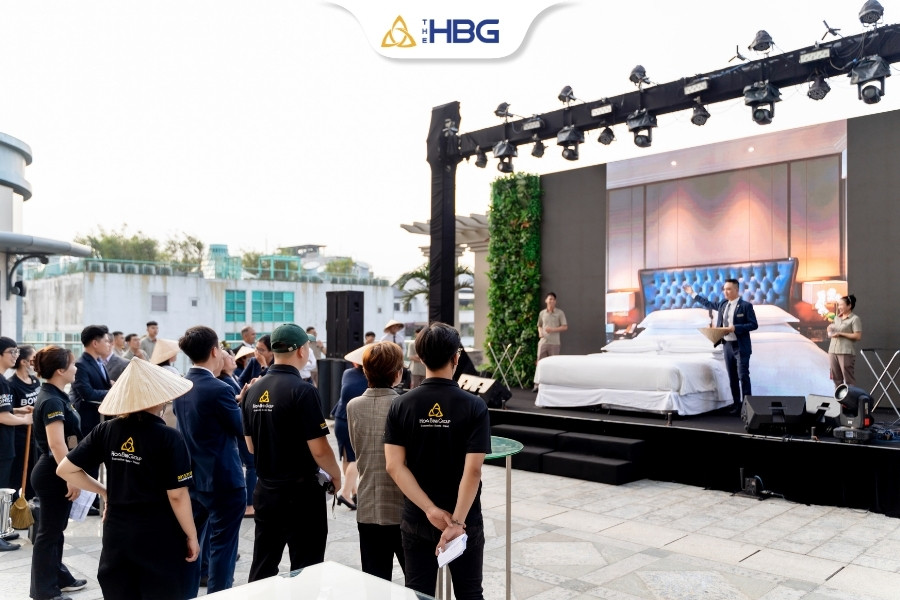
The HBG delivers complete stage construction solutions that combine design creativity, technical reliability, safety, and smooth event execution.
Conclusion
Professional stage construction is one of the most important elements in creating a successful event. A well-designed and well-built stage helps communicate the event message, highlight the brand, support speakers and performers, improve audience engagement, and create strong visual moments for photos, videos, and livestreams.
To create an effective stage, organizers should consider the event objective, venue conditions, stage size, layout, materials, technical systems, safety requirements, and coordination with other event elements. When these details are managed properly, the stage becomes more than a physical platform; it becomes the center of the event experience.
With integrated event production capabilities, The HBG can support businesses and organizations with complete stage design and build services for different event formats. Whether you need a formal conference stage, an elegant gala dinner stage, a product launch setup, an outdoor ceremony platform, or a customized branded stage, HBG is ready to deliver professional solutions from planning to completion.
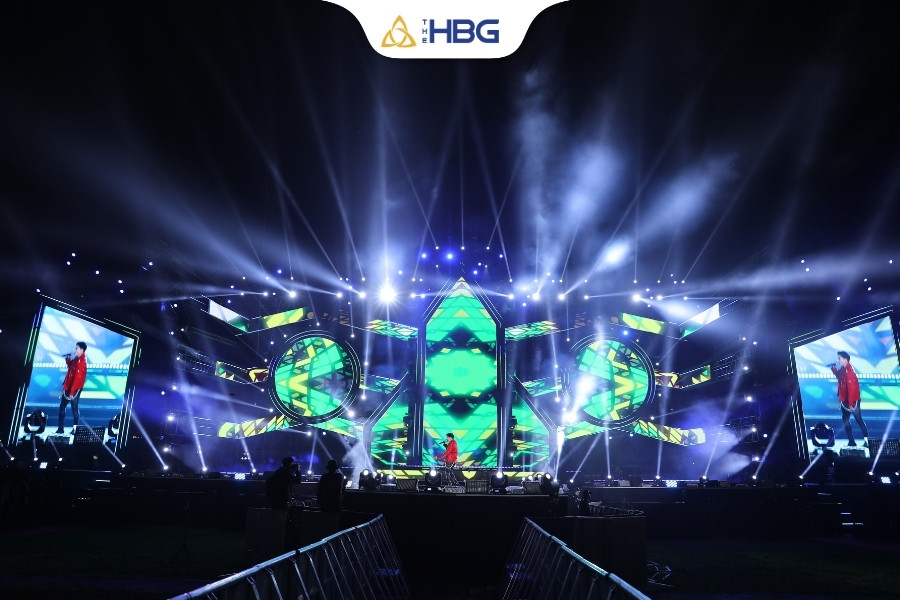
A professionally constructed stage helps turn event ideas into memorable experiences with stronger branding, safer execution, and greater audience impact.
-

Gallery: Vietnam Logistics Forum 2025
-

Gallery: 17th Congress of the Hanoi Women’s Union (2025–2030 term)
-

Gallery: 50th Anniversary Celebration of Da Lan Huong Kindergarten
-

Gallery: Vietnam – Jordan Business Forum
-

Gallery: Gala Dinner celebrating Vietnamese Teachers’ Day
-

Gallery: Closing Ceremony of “Pilot Implementation of the Safe, Clean and Green Community”
-

Gallery: Samsung SDS Sports Day 2025
-

Gallery: WEST’s MICE event “Together in Vietnam”
-

Conference Highlights
-

Tour Highlights
-

Product Launch & Sales Opening Event
-

Educational Event
-

Events Highlights
-

Year-End Party
-

The People Behind Great Events
-

Recognition & Awards Ceremony
.jpg)